29 Jun 2026
Wildlife Removal Costs in Ontario: 2026 Pricing Guide
Wildlife removal costs in Ontario typically range from $250 to $1,500+ in 2026, depending on the pest type, infestation severity, property size, access points, humane removal method, wildlife exclusion, and repairs needed. This guide helps Ontario homeowners compare pest control services, understand wildlife inspection fees, follow up visits, sealing entry points, and the true cost of removing raccoons, squirrels, skunks, birds, mice, rodents, bats, and other wild animals.
Key Takeaways
- Wildlife removal costs in Ontario usually range from $300 to $1,500+, depending on pest type, property size, access points, infestation severity, and repairs needed.
- Raccoons, squirrels, skunks, birds, rodents, bats, and mice all require different animal control methods, which affects the final quote.
- Humane removal, wildlife exclusion, sealing entry points, and follow up visits are often more important than simply setting a trap.
- Ontario homeowners should ask for a professional inspection, clear pricing, and a service guarantee before hiring pest control services.
- Extra fees may apply for attic repairs, damaged insulation, removing nests, emergency calls, roof vents, or multiple visits.
- Long term prevention is the gold standard because removing the animal without sealing entry points often leads to re entry.
How Much Does Wildlife Removal Cost in Ontario?
The average cost to remove wildlife in Ontario in 2026 ranges from about $300 to $1,500+, depending on the animal, the infestation severity, and how much property damage has already happened. A straightforward raccoon or squirrel job with one or two access points usually lands between $300 and $600. Once animals are nesting deep in an attic, chewing wires, or breeding, the price rises because the work shifts from simple trapping to full inspection, wildlife exclusion, and attic repairs.
It helps to think of wildlife removal the way you would any other pest control service. The visit pays for trained, licensed technicians, the equipment, the live traps, and the time it takes to make your house secure. Unlike a quick one time service for insects, removing wild animals from a roof or attic is a multi step job that protects both your property and your family's property safety.
Most homeowners are surprised that the cheapest quote is rarely the best value. Professional pest control that includes sealing entry points and a service guarantee costs more upfront but prevents the same animal — or the next one — from getting back in.
Average Wildlife Removal Pricing Across Ontario
Across Ontario, 2026 prices reflect your region, your property size, and how hard the nesting area is to reach. In the Greater Toronto Area, animal control rates tend to run roughly 10–15% higher than smaller towns because of labour demand and travel.
| Location | Typical Removal Cost | Common Add-ons |
|---|---|---|
| Toronto & GTA | $350 – $650 | Attic restoration, multiple exclusion doors |
| Ottawa | $300 – $600 | Roof vents screening, follow up visits |
| Waterloo Region | $300 – $575 | Damaged insulation replacement |
| Barrie & Simcoe | $300 – $550 | Chimney capping, removing nests |
| London | $300 – $575 | Soffit repair, full inspection |
A downtown condo with one access point will always cost less than a large house in Scarborough or Vaughan with squirrel activity in two soffits and a raccoon den in the attic. The further the licensed technicians have to travel and the more entry points they have to seal, the higher the control costs.
Wildlife Removal Cost by Animal Type
Different wild animals create different problems, so the pest type is one of the biggest key factors in your final quote. Below are typical 2026 Ontario ranges for the most common infestations.
| Animal | Typical Cost | Notes |
|---|---|---|
| Squirrels | $300 – $600 | One way door over one entry point; extra doors $225–$400 each |
| Raccoons | $300 – $550 | Higher if babies are present in the nesting area |
| Mice / rodents | $200 – $600 | Trapping plus sealing; exclusion $400–$800 for a full house |
| Birds | $250 – $500 | Removing nests from roof vents and screening openings |
| Bats | $400 – $1,200 | Year round protected species; needs licensed technicians |
| Skunks | $300 – $550 | Under decks and sheds; relocation and exclusion |
Squirrels
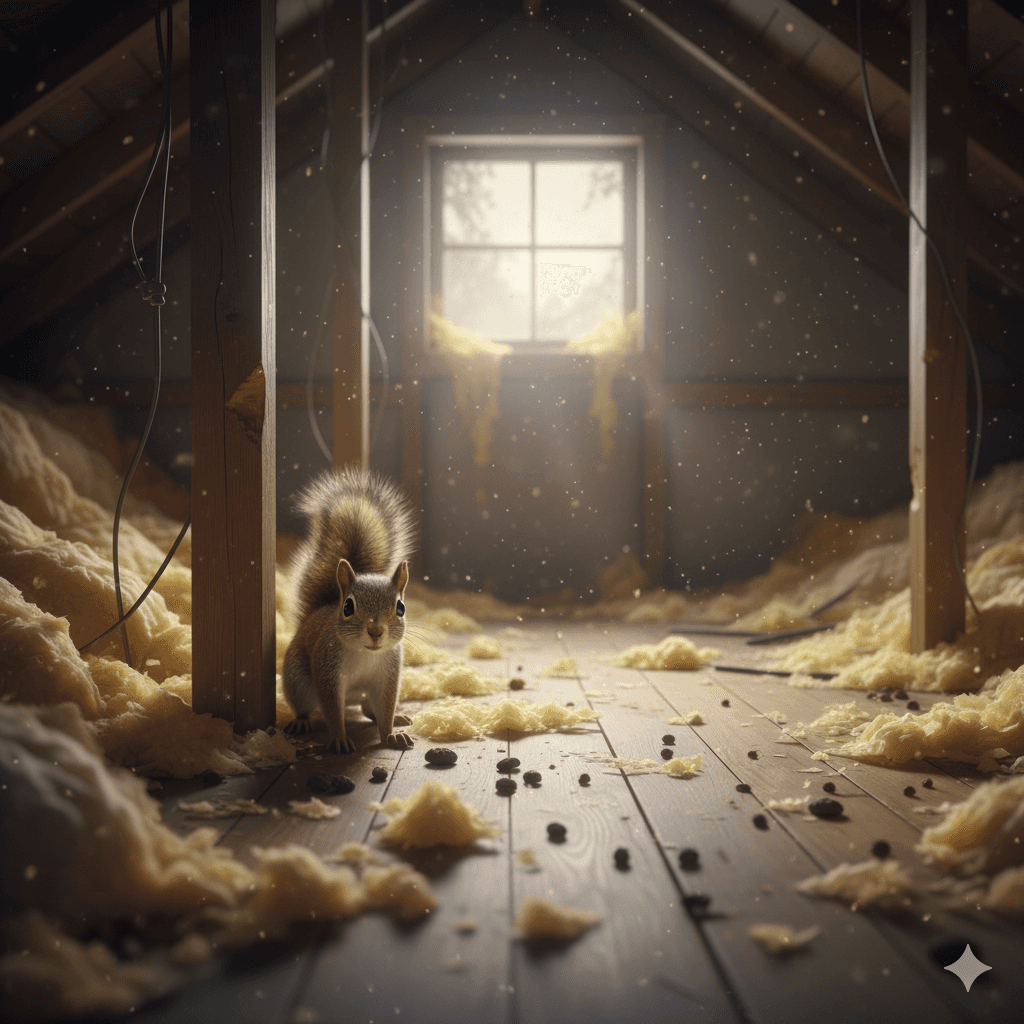
Squirrel activity in an attic or soffit is one of the most common calls in Ontario. A standard job — setting live traps or a one way door and relocating the animal — runs $300 to $600 and usually includes installing an exclusion door over one entry point. Because squirrels chew, larger infestations can leave damaged insulation and gnawed wiring that turn a simple removal into a bigger repair bill.
Raccoons
Raccoon removal averages $300 to $550. The price climbs when a mother has babies in the nesting area, because licensed technicians must remove the litter humanely before sealing entry points. Raccoons cause significant property damage to roofs, soffits, and vents, so attic repairs are common after the animal is gone.
Mice and Rodents
Rodents are a year round problem. Basic trapping runs $200 to $350, but the long term solution is exclusion — sealing all exterior holes with steel mesh — which costs $400 to $800 depending on property size. Without sealing entry points, mice simply find new access points and the infestation spreads again.
Birds and Bats
Birds nesting in roof vents need removing nests plus screening, generally $250 to $500. Bats are more specialized and protected, so removal demands professional help and licensed technicians, with costs from $400 to over $1,200.
What Drives Wildlife Control Costs
There is no single answer to “how much does wildlife removal cost in Ontario in 2026?” because several factors determine the final quote. The most influential price drivers include:
- Pest type and animal behaviour. A single squirrel is a quick job; a raccoon family or a bat colony is not. The animal dictates the method, the permits, and the time.
- Infestation severity. A fresh problem caught at the first inspection costs far less than one where the infestation spreads through the attic and walls over months.
- Property size and access. Larger homes have more roofline, more roof vents, and more potential entry points. Difficult access points — steep roofs, tight soffits — add labour and sometimes extra fees.
- Property damage already done. Chewed wires, torn ductwork, and damaged insulation push the job from removal into restoration, which is where attic repairs and minor repairs add up.
- Number of visits. Some animals are removed on the first trip; others need multiple visits or follow up visits to confirm the nesting area is empty before sealing.
- Sealing and exclusion. Wildlife exclusion — permanently sealing entry points so there is no re entry — is the part that protects your house long term, and it is priced by the number of openings.
Inspection, Removal, and Exclusion: How the Job Works
A professional wildlife job in Ontario follows a clear sequence, and understanding it helps you read a quote and spot clear pricing.
It starts with a professional inspection. During the first inspection, licensed technicians walk the roofline, attic, and foundation to find every entry point, identify the animal, and confirm whether there is a nesting area with young. A thorough full inspection is what separates real professional pest control from a quick trap-and-go visit.
Next comes humane removal. Using live traps or one way doors, the technician removes the animal without harming it. Humane removal is the gold standard in Ontario animal control, and reputable companies will never leave babies behind to die in the nesting area.
Then comes the part that actually protects your property: sealing entry points. Wildlife exclusion means closing every gap — soffit corners, roof vents, chimney gaps, and foundation cracks — so there is no re entry. This is the long term solution, and it is why exclusion-focused jobs cost more than a one time service.
Finally, there is repair and follow up. Attic repairs, replacing damaged insulation, and minor repairs to soffits or vents restore the house. Good companies schedule follow up visits and back the work with a written service guarantee covering re entry for a set period.
DIY Methods vs. Professional Help
Most homeowners are tempted to try DIY methods first — hardware-store traps, repellents, or sealing a hole themselves. For a single mouse this can work, but for raccoons, squirrels, and bats it usually backfires. DIY traps often miss babies in the nesting area, and sealing entry points before the animal is out can trap it inside the wall, causing odour and more property damage.
Professional help matters most when the infestation severity is high, when there are larger infestations across multiple access points, or when protected animals like bats are involved. Licensed technicians know Ontario's humane removal rules, carry the right live traps, and can spot the squirrel activity or roof-vent damage an untrained eye misses. The cost of professional help is almost always less than the expensive damage that follows a failed DIY attempt.
How Wildlife Removal Compares to General Pest Control
Wildlife removal sits alongside, but apart from, general pest control services. Insects like carpenter ants, pavement ants, and wasps are handled with treatment rather than trapping, and the control costs are usually lower.
| Service | Typical Ontario Cost (2026) |
|---|---|
| General pest control (single treatment) | $150 – $400 |
| Wasp nest removal | $150 – $350 |
| Carpenter ants treatment | $200 – $500 |
| Quarterly prevention plan | $90 – $150 per visit |
A wasp nest tucked under an eave is a fast job at $150 to $350, though removing nests in hard-to-reach spots costs more. Carpenter ants are a bigger concern because, like wildlife, they cause structural property damage if the infestation spreads. Pavement ants are mostly a nuisance and sit at the lower end. For ongoing peace of mind, many Ontario homeowners choose a year round prevention plan so insects, rodents, and other pests are caught before they become expensive damage.
The big difference is method. A pest control cost for insects covers spraying, baiting, and monitoring, while wildlife removal covers trapping, relocation, and structural sealing. Both protect your home, but a wildlife job is more labour-intensive because every roofline gap and soffit has to be checked and closed. When you compare a pest control cost to a wildlife quote, you are really comparing a treatment to a renovation-style repair — which is why the numbers look different even though both fall under the same broad umbrella of home protection.
Keeping Pets and Family Safe During Removal
A point that worries many Ontario homeowners is whether the removal process is safe for children and pets. Reputable companies use humane removal and pet-safe methods precisely so the household is never put at risk. Live traps and one way doors contain no poisons, which matters in homes with curious dogs or cats. If bait or treatment is used for insects nearby, licensed technicians will tell you exactly how long to keep pets and kids out of the treated area.
Wild animals themselves are the real hazard. Raccoons, skunks, and bats can carry disease, and a cornered animal may bite or scratch a pet that gets too close to the nesting area. That is another reason professional help beats DIY methods: trained technicians handle the animal so your family never has to. Securing garbage bins, feeding pets indoors, and closing off access points under decks all reduce the chance that wildlife returns to a yard where pets play.
Additional Wildlife Costs to Plan For
Even after the animal is gone, there are extra fees that most homeowners overlook. Attic repairs and replacing damaged insulation can run several hundred to a few thousand dollars when an infestation has gone on for months. Capping a chimney, screening roof vents, or repairing chewed soffits are common minor repairs that protect against re entry.
Prevention also has a cost. Simple steps — securing garbage bins, trimming branches away from the roof, and a yearly professional inspection — reduce the odds of a repeat visit. Some companies bundle long term prevention with their service guarantee, which is the most reliable long term solution for property safety.
How to Get a Fair Quote
A fair wildlife removal quote should start with a proper inspection, not a guess over the phone. Ask what is included: animal removal, sealing entry points, follow up visits, minor repairs, cleanup, and any service guarantee.
Compare clear written estimates and watch for extra fees tied to roof access, attic damage, or larger infestations before approving the job. And if an unexpected wildlife problem strains your budget, ask about flexible payment options—Critter Hero offers affordable monthly installments so you can get the work done without the financial stress. For upfront pricing and humane service, contact Critter Hero to book an inspection today. Our team provides clear recommendations, humane removal options, and long term prevention so you know exactly what the job includes before work begins.
Frequently Asked Questions
1. How much does wildlife removal cost in Ontario?
In 2026, wildlife removal in Ontario typically costs $300 to $1,500+. The final quote depends on the animal, infestation severity, property size, and how many entry points need sealing.
2. Why is sealing entry points so important?
Removing the animal solves today's problem, but sealing entry points (wildlife exclusion) is the long term solution that prevents re entry. Without it, the infestation spreads again and you pay twice.
3. Is humane removal the standard in Ontario?
Yes. Humane removal using live traps and one way doors is the gold standard. Licensed technicians remove animals — and any babies in the nesting area — without harm.
4. Does the type of animal change the price?
Absolutely. Pest type is a key factor: mice may cost $200 to $600, raccoons and squirrels $300 to $600, and bats $400 to $1,200 because they need specialized professional help.
5. Are attic repairs included in the removal cost?
Usually not. Attic repairs, damaged insulation replacement, and minor repairs are extra fees that appear after a full inspection reveals the property damage.
6. Can I use DIY methods instead?
DIY methods can work for a single mouse, but for raccoons, squirrels, and birds they often fail and let the infestation spread. Professional pest control with a service guarantee is safer and protects against expensive damage.
- How Much Does Wildlife Removal Cost in Ontario?
- Average Wildlife Removal Pricing Across Ontario
- Wildlife Removal Cost by Animal Type
- What Drives Wildlife Control Costs
- Inspection, Removal, and Exclusion: How the Job Works
- DIY Methods vs. Professional Help
- How Wildlife Removal Compares to General Pest Control
- Keeping Pets and Family Safe During Removal
- Additional Wildlife Costs to Plan For
- How to Get a Fair Quote
- Frequently Asked Questions